

BPC-157 Acetate Troche
Product Overview
BPC-157 (Body Protection Compound-157) Acetate is a synthetic peptide based on a compound found in the stomach.[1] BPC-157 has been studied primarily in animal and laboratory models for its possible role in tissue repair process.[1,2]
Most of what we know about BPC-157 comes from animal and laboratory studies; very limited human data exists. BPC-157 Acetate is not approved by the U.S. Food and Drug Administration for any use.
Use should be guided by a licensed healthcare provider with consideration of the limited clinical evidence available.
The information below reflects a commonly used dosing approach for this product. It is provided for general information only and is not a dosing recommendation. A prescribing provider may select a different amount, frequency, or duration based on the patient’s treatment goals, response, tolerability, medical history, concomitant therapies, and other patient-specific factors.
Dissolve one troche between the cheek and gum once daily.
Your prescribed amount, strength, frequency, or duration may differ from the common dosing information shown above. Use this medication only as directed on your prescription label, and do not change how you use it unless instructed by your prescribing provider. Contact your provider or pharmacist if you have questions about your individualized directions.
The pharmacologic activity of BPC-157 Acetate is not fully characterized; however, several mechanisms have been proposed based on preclinical studies.
These include:[1,2]
- Modulation of nitric oxide signaling: Has been shown to influence nitric oxide pathways, which play a central role in vascular tone, angiogenesis, and tissue perfusion
- Promotion of angiogenesis: Upregulation of vascular endothelial growth factor and related pathways may support the formation of new blood vessels
- Regulation of inflammatory responses: Appears to modulate pro-inflammatory and anti-inflammatory cytokine activity in experimental models
- Support of tissue repair pathways: Preclinical studies suggest effects on fibroblast activity, collagen formation, and extracellular matrix remodeling
These mechanisms may contribute to observed effects in animal models involving musculoskeletal, gastrointestinal, and soft tissue healing. However, translation of these findings to human clinical outcomes remains uncertain.
Due to limited human data, BPC-157 Acetate should be used with caution.
- Safety and efficacy in humans have not been established
- Use in patients with complex medical conditions should be carefully evaluated
- Potential effects on angiogenesis and cellular signaling[3] warrant caution in patients with active malignancy
- May pose risk for immunogenicity for certain routes of administration and may have complexities regarding peptide-related impurities[4]
- BPC-157 is listed as a prohibited substance by the World Anti-Doping Agency; athletes subject to anti-doping testing should be counseled accordingly[5]
- Long-term safety data are not available
Therapy should be individualized and supervised by a qualified healthcare provider.
Formal drug interaction studies have not been conducted.
Given its proposed effects on nitric oxide pathways and inflammatory signaling, theoretical interactions may occur with:
- Vasodilatory medications
- Anti-inflammatory agents
- Agents affecting vascular or endothelial function
Patients should disclose all medications and supplements prior to use.
Clinical safety data in humans are limited.
In preclinical studies, BPC-157 Acetate has been generally well tolerated, with no significant toxicity reported at studied doses.[2]
Potential adverse effects in humans are not well characterized but may include:
- Nausea
- Increased appetite
- Dizziness or lightheadedness
- Headache
Further clinical evaluation is needed to establish a comprehensive safety profile.
Any suspected side effects, medication errors, and concerns about this medication, such as the wrong strength, possible contamination, or problems with labeling or packaging, should be reported to the prescribing healthcare provider, Empower Pharmacy, and the FDA through MedWatch. For this compounded medication, reports should also be submitted to the appropriate state regulatory authority where the product was compounded and the state where it was shipped, if different.
There are no adequate and well-controlled studies evaluating BPC-157 Acetate in pregnant or breastfeeding individuals.
Due to the lack of safety data and potential effects on cellular growth and angiogenesis, use during pregnancy and breastfeeding is contraindicated.
Proper storage of BPC-157 Acetate troches is important to maintain stability and consistency.
- Storage: Room temperature (68°F to 77°F (20°C to 25°C))
Do not use beyond the beyond-use date provided by Empower.
Disclaimer
Compounded products are not FDA-approved and have not been evaluated by the FDA for safety or efficacy. Compounded products from our 503A facility are available only through a valid patient-specific prescription from a licensed prescriber and are prepared by a licensed pharmacy; shipping and state restrictions may apply. Compounded drug products from our 503B facility are only available for order by licensed healthcare providers and pharmacies. This document is for educational and informational use by healthcare professionals. It is not medical, legal, or regulatory advice, and it is not a promotion of any product. Except for products identified as currently available, it is not a statement of product availability.
Regulatory status
HHS’s interim policy is an expression of enforcement intent under stated conditions; it does not approve any product, change the requirements of the FD&C Act, or place any substance on the 503A Bulks List, which requires FDA rulemaking. PCAC recommendations are advisory. No dose of this product has been established as safe or effective in humans. State boards of pharmacy and medicine independently regulate compounding and prescribing. Regulatory status can change; confirm current status with FDA, HHS, and applicable state authorities before relying on this summary.
Reporting
Healthcare professionals and patients are encouraged to report suspected adverse events and product quality concerns to FDA MedWatch (fda.gov/medwatch; 1-800-FDA-1088).
- Rahman OF, Lee SJ, Seeds WA. Therapeutic Peptides in Orthopaedics: Applications, Challenges, and Future Directions. J Am Acad Orthop Surg Glob Res Rev. 2026;10(1):e25.00236. Published 2026 Jan 2. doi:10.5435/JAAOSGlobal-D-25-00236.
- Chang CH, Tsai WC, Hsu YH, Pang JH. Pentadecapeptide BPC 157 enhances the growth hormone receptor expression in tendon fibroblasts. Molecules. 2014;19(11):19066-19077. Published 2014 Nov 19. doi:10.3390/molecules191119066.
- Vasireddi N, Hahamyan H, Salata MJ, et al. Emerging Use of BPC-157 in Orthopaedic Sports Medicine: A Systematic Review. HSS J. Published online July 31, 2025. doi:10.1177/15563316251355551.
- US Food and Drug Administration. Certain bulk drug substances for use in compounding that may present significant safety risks. FDA. Updated April 22, 2026. Accessed October 29, 2026. https://www.fda.gov/drugs/human-drug-compounding/certain-bulk-drug-substances-use-compounding-may-present-significant-safety-risks
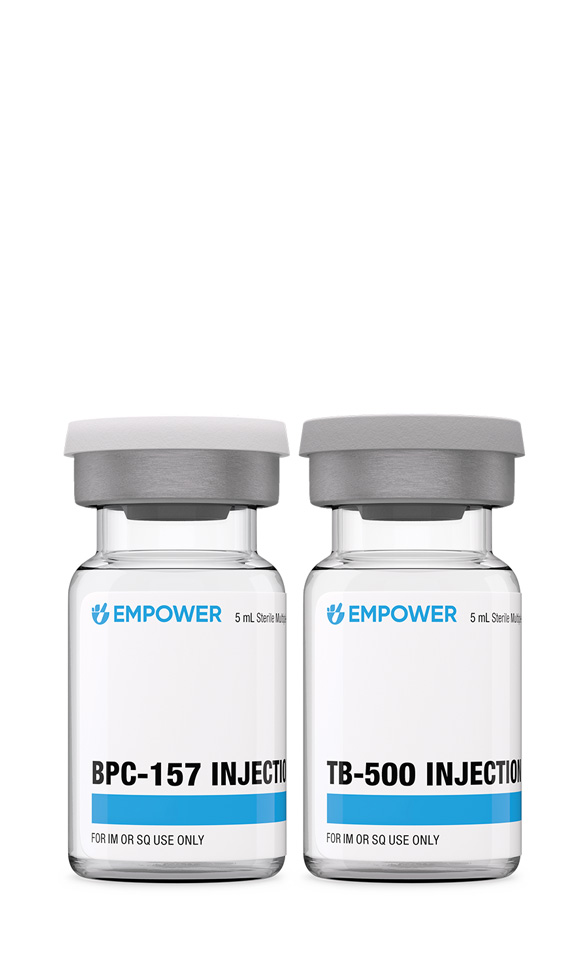 Wolverine Stack
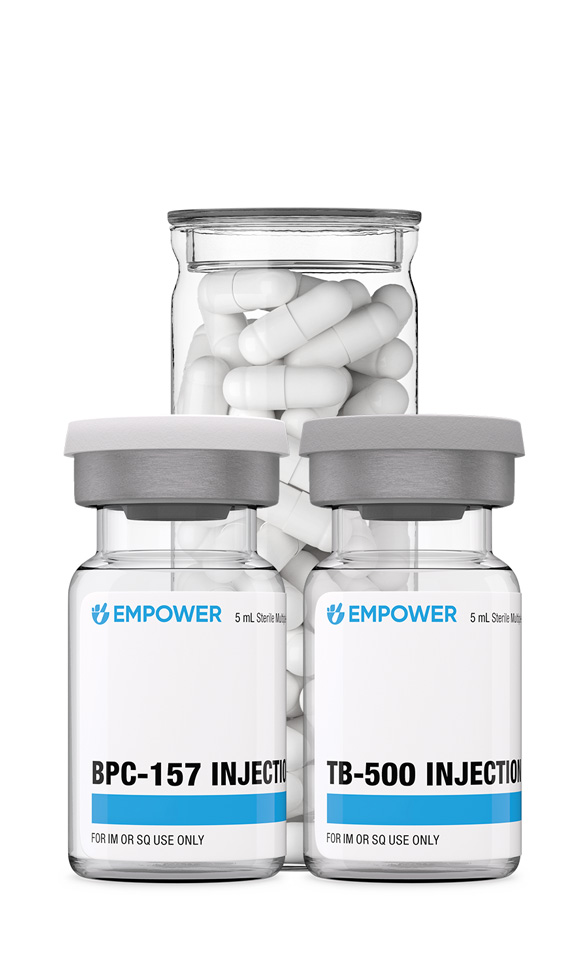 Glow Stack
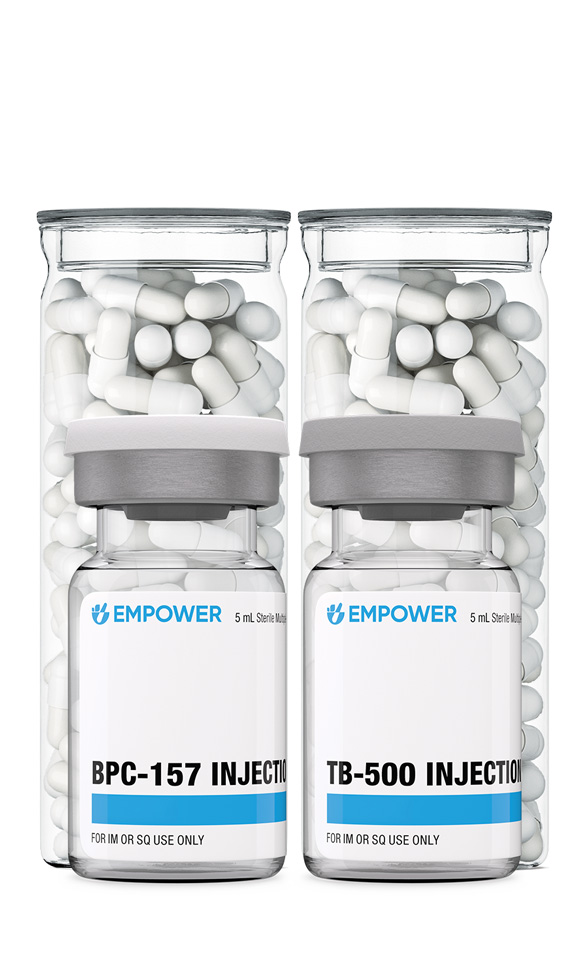 Klow Stack
 BPC-157 Acetate Capsules
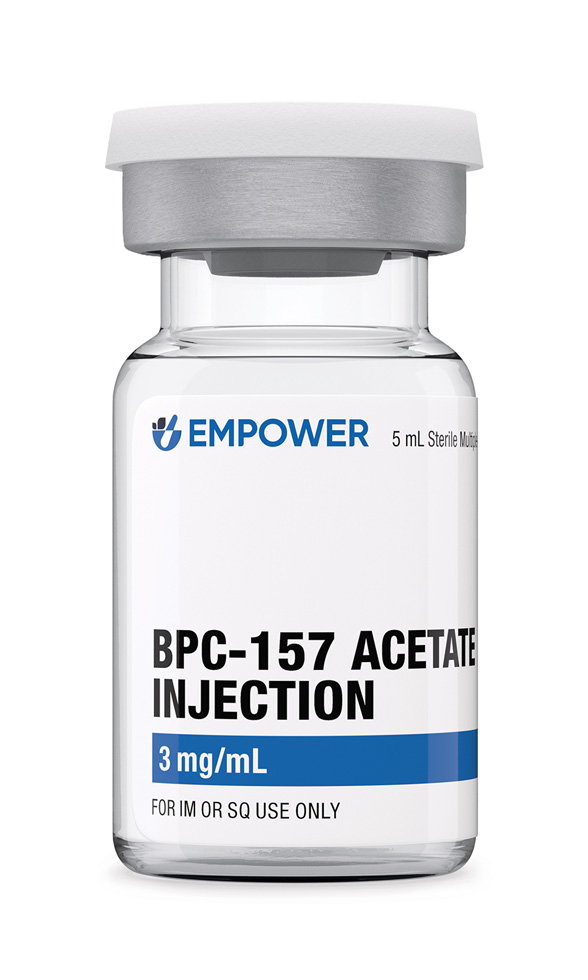 BPC-157 Acetate Injection
 KPV Acetate Capsule
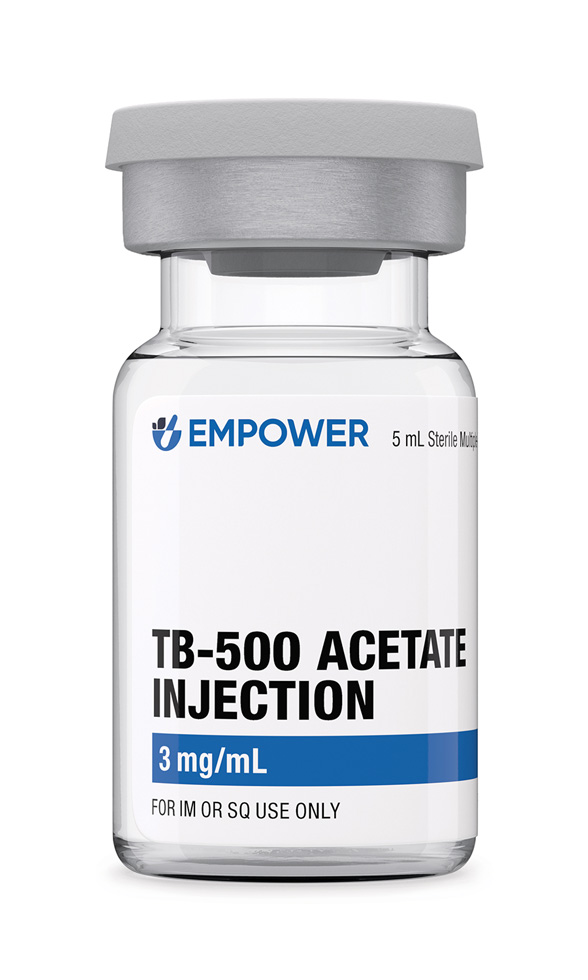 TB-500 Acetate Injection
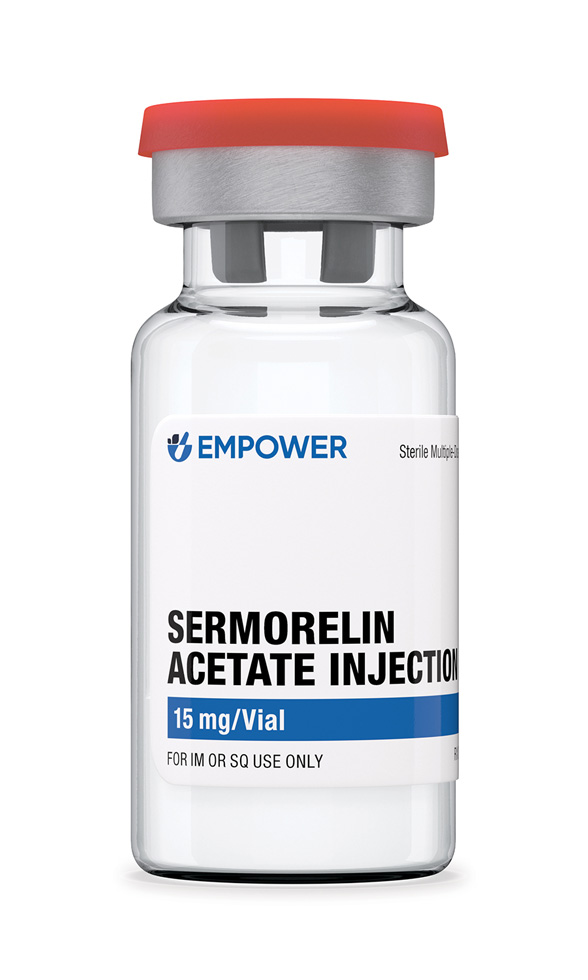 Sermorelin Acetate Injection
503A vs 503B
- 503A pharmacies compound products for specific patients whose prescriptions are sent by their healthcare provider.
- 503B outsourcing facilities compound products on a larger scale (bulk amounts) for healthcare providers to have on hand and administer to patients in their offices.
Frequently asked questions
Our team of experts has the answers you're looking for.
A clinical pharmacist cannot recommend a specific doctor. Because we are licensed in all 50 states*, we can accept prescriptions from many licensed prescribers if the prescription is written within their scope of practice and with a valid patient-practitioner relationship.
*Licensing is subject to change.
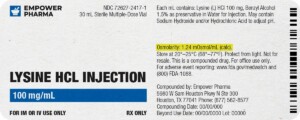
Each injectable IV product will have the osmolarity listed on the label located on the vial.
Given the vastness and uniqueness of individualized compounded formulations, it is impossible to list every potential compound we offer. To inquire if we currently carry or can compound your prescription, please fill out the form located on our Contact page or call us at (877) 562-8577.
We source all our medications and active pharmaceutical ingredients from FDA-registered suppliers and manufacturers.