

KPV Acetate Capsule
Product Overview
KPV Acetate is a synthetic peptide made from a small piece of a naturally occurring hormone the body uses to help control inflammation. KPV keeps much of the parent hormone’s activity in the body without its pigment-darkening effects.[1,2]
KPV has been studied primarily in animal and laboratory models for its possible roles in supporting the health of the gut lining and calming inflammation.[1,2]
Most of the available evidence on KPV comes from animal and laboratory studies. KPV Acetate has not been evaluated in controlled human studies, and it is not approved by the U.S. Food and Drug Administration for any use.
Use should be guided by a licensed healthcare provider with consideration of the limited clinical evidence available.
The information below reflects a commonly used dosing approach for this product. It is provided for general information only and is not a dosing recommendation. A prescribing provider may select a different amount, frequency, or duration based on the patient’s treatment goals, response, tolerability, medical history, concomitant therapies, and other patient-specific factors.
Take 500 to 1500 mcg by mouth once to twice daily.
Your prescribed amount, strength, frequency, or duration may differ from the common dosing information shown above. Use this medication only as directed on your prescription label, and do not change how you use it unless instructed by your prescribing provider. Contact your provider or pharmacist if you have questions about your individualized directions.
The pharmacologic activity of KPV Acetate is not fully characterized; however, several mechanisms have been proposed based on preclinical and in vitro studies.
KPV:[2]
PepT1-mediated transport into intestinal epithelial and immune cells, which appears necessary for its anti-inflammatory activity
Inhibition of NF-κB and MAP kinase signaling, reducing downstream pro-inflammatory cytokine secretion
These mechanisms are proposed to support gastrointestinal mucosal integrity and resolution of inflammation. However, translation of these preclinical and in vitro findings to human clinical outcomes remains uncertain.
Due to limited human data for KPV Acetate, this product should be used with caution.
- Safety and efficacy of KPV Acetate in humans have not been established[3]
- Use in patients with complex medical conditions should be carefully evaluated
- Long-term safety data are not available for KPV Acetate
Therapy should be individualized and supervised by a qualified healthcare provider.
No clinically significant drug interactions have been identified for KPV Acetate. Formal drug interaction studies have not been conducted.
- Given the proposed mechanism of action, theoretical interactions may occur with:
- Anti-inflammatory or immunosuppressive agents
- Other biologic or investigational products
Patients should disclose all medications and supplements prior to use.
No published human data characterizing adverse-event rates exists for KPV Acetate.
- Based on available data and mechanism of action, potential adverse effects may include:
- Gastrointestinal discomfort
- Headache
- Fatigue
Further clinical evaluation is needed to establish a comprehensive safety profile for KPV Acetate.
Any suspected side effects, medication errors, and concerns about this medication, such as the wrong strength, possible contamination, or problems with labeling or packaging, should be reported to the prescribing healthcare provider, Empower Pharmacy, and the FDA through MedWatch. For this compounded medication, reports should also be submitted to the appropriate state regulatory authority where the product was compounded and the state where it was shipped, if different.
There are no adequate and well-controlled studies evaluating KPV Acetate in pregnant or breastfeeding individuals.
Due to the lack of safety data and potential effects on immune signaling, use during pregnancy and breastfeeding is contraindicated.
Proper storage of KPV Acetate capsules is important to maintain stability and consistency.
- Storage: Room temperature (68°F to 77°F (20°C to 25°C))
Do not use beyond the beyond-use date provided by Empower.
Disclaimer
Compounded products are not FDA-approved and have not been evaluated by the FDA for safety or efficacy. Compounded products from our 503A facility are available only through a valid patient-specific prescription from a licensed prescriber and are prepared by a licensed pharmacy; shipping and state restrictions may apply. Compounded drug products from our 503B facility are only available for order by licensed healthcare providers and pharmacies. This document is for educational and informational use by healthcare professionals. It is not medical, legal, or regulatory advice, and it is not a promotion of any product. Except for products identified as currently available, it is not a statement of product availability.
Regulatory status
HHS’s interim policy is an expression of enforcement intent under stated conditions; it does not approve any product, change the requirements of the FD&C Act, or place any substance on the 503A Bulks List, which requires FDA rulemaking. PCAC recommendations are advisory. No dose of this product has been established as safe or effective in humans. State boards of pharmacy and medicine independently regulate compounding and prescribing. Regulatory status can change; confirm current status with FDA, HHS, and applicable state authorities before relying on this summary.
Reporting
Healthcare professionals and patients are encouraged to report suspected adverse events and product quality concerns to FDA MedWatch (fda.gov/medwatch; 1-800-FDA-1088).
- Xiao B, Xu Z, Viennois E, et al. Orally targeted delivery of tripeptide KPV via hyaluronic acid-functionalized nanoparticles efficiently alleviates ulcerative colitis. Mol Ther. 2017;25(7):1628-1640. doi:10.1016/j.ymthe.2016.11.020.
- Dalmasso G, Charrier-Hisamuddin L, Nguyen HT, Yan Y, Sitaraman S, Merlin D. PepT1-mediated tripeptide KPV uptake reduces intestinal inflammation. Gastroenterology. 2008;134(1):166-178. doi:10.1053/j.gastro.2007.10.026.
- US Food and Drug Administration. Certain bulk drug substances for use in compounding that may present significant safety risks. FDA. Updated April 22, 2026. Accessed November 3, 2026. https://www.fda.gov/drugs/human-drug-compounding/certain-bulk-drug-substances-use-compounding-may-present-significant-safety-risks
What Is the HHS Peptide Enforcement Discretion Policy?
HHS’s peptide enforcement discretion policy is a statement that it does not intend to take enforcement action against certain peptide compounding when specific conditions are met. It is a draft interim policy that is not binding on HHS or the public, and it does not change Section 503A. The policy stays in place while FDA builds the 503A bulk drug substances list through rulemaking. It applies to state-licensed pharmacies, Federal facilities, and licensed physicians. A “licensed physician” here means one who compounds, not prescribers in general.
For prescribers, this changes the federal enforcement picture for the pharmacies you can work with, but it does not impact any state-specific laws or regulations that may exist in your state.
Which Peptides Does the Policy Cover?
Six: BPC-157, Epitalon, KPV, MOTS-c, Semax, and TB-500. Each is limited to the specific form and routes listed. A peptide not on the list, or in a different form or route, is outside the policy.
Source: Appendix B of the HHS policy. Appendix B defines each peptide by exact sequence and formula. For instance, it describes TB-500 as a fragment of its parent protein, thymosin beta-4. The full text is in the Federal Register notice.
Do Prescribers Need a Patient-Specific Prescription?
Yes. The policy names section 503A’s patient-specific prescription requirement as one of its conditions The clinical decision for each patient is still yours. Consider documenting:
- Your clinical rationale for each individual patient
- Patient consent, including that the product is compounded and not FDA-approved
- The specific peptide, form, and route, checked against Appendix B
Is a Compounded Peptide FDA-Approved?
No. Compounded drugs are not FDA-approved, which means FDA does not review their safety, effectiveness, or quality before they are marketed. None of these six peptides is an FDA-approved drug.
HHS states that its policy is meant to expand patient access while FDA reviews these substances. Enforcement discretion describes how HHS intends to use its enforcement resources. It is not an approval of any peptide or compounded product.
Where did the active ingredient come from?
An FDA-registered original manufacturer, with a Certificate of Analysis reviewed for each lot.
Can I see testing, not just a purity number?
Each batch is released with a Certificate of Conformance. Prescribers can request it.
What is a COC, and what is a COA?
A Certificate of Conformance (COC) is Empower’s batch-release document for a finished peptide; prescribers can request it. A Certificate of Analysis (COA) comes from the active ingredient manufacturer for each lot and, as reported, must show the manufacturer’s location under the HHS policy. Confirm details in the policy text.
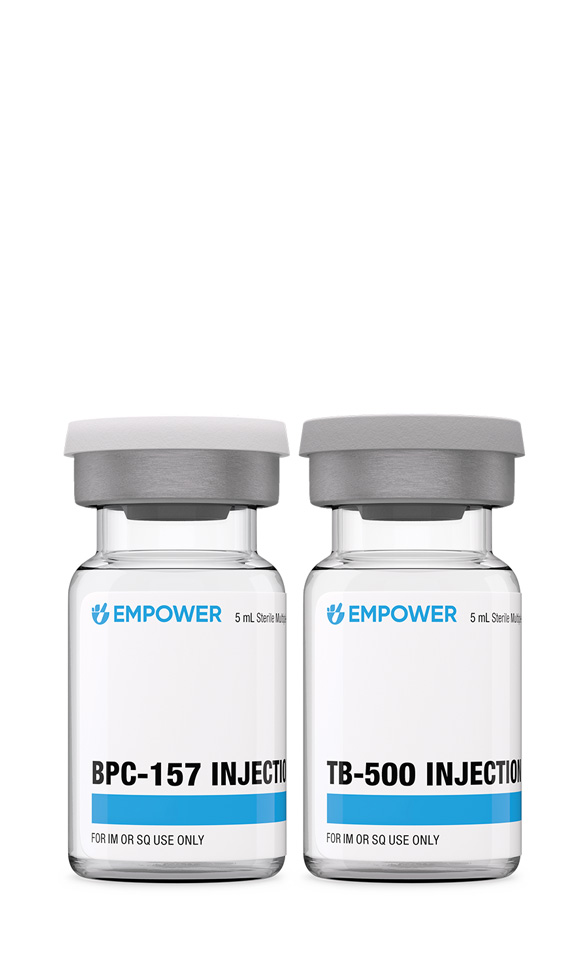 Wolverine Stack
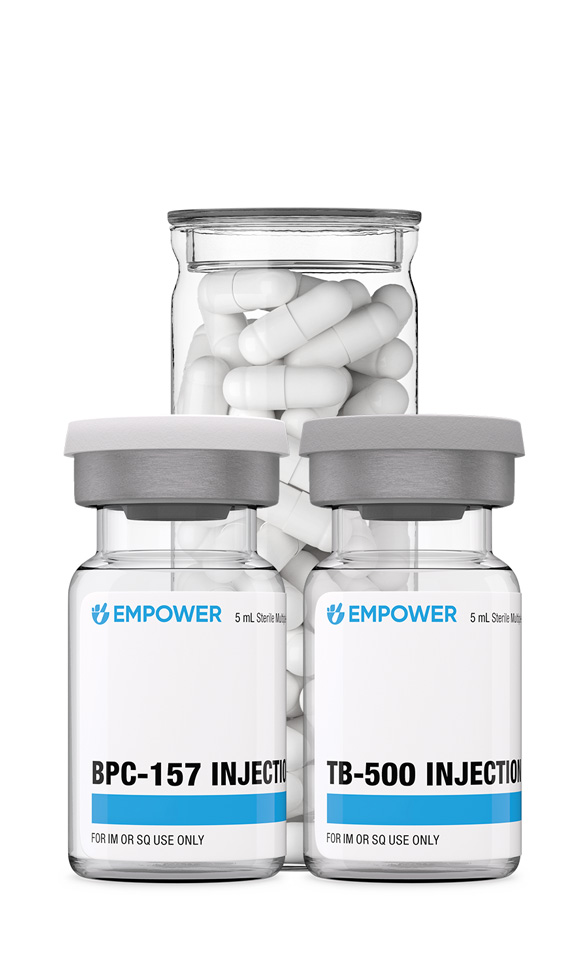 Glow Stack
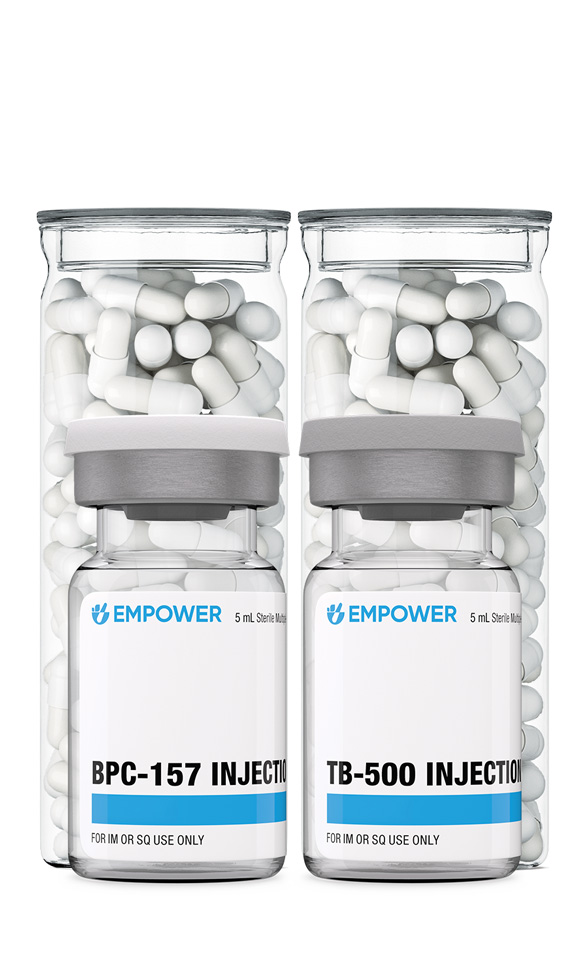 Klow Stack
 BPC-157 Acetate Capsules
 BPC-157 Acetate Troche
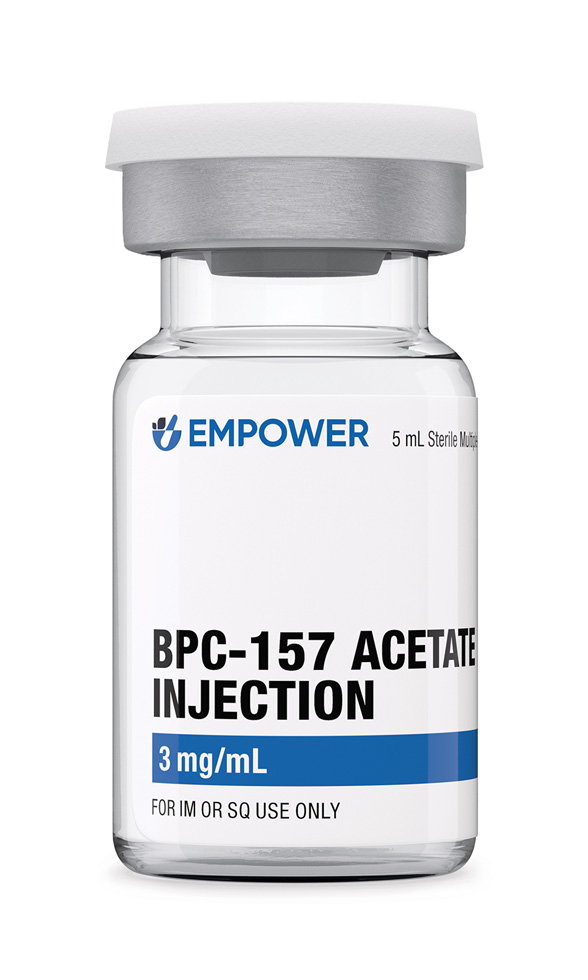 BPC-157 Acetate Injection
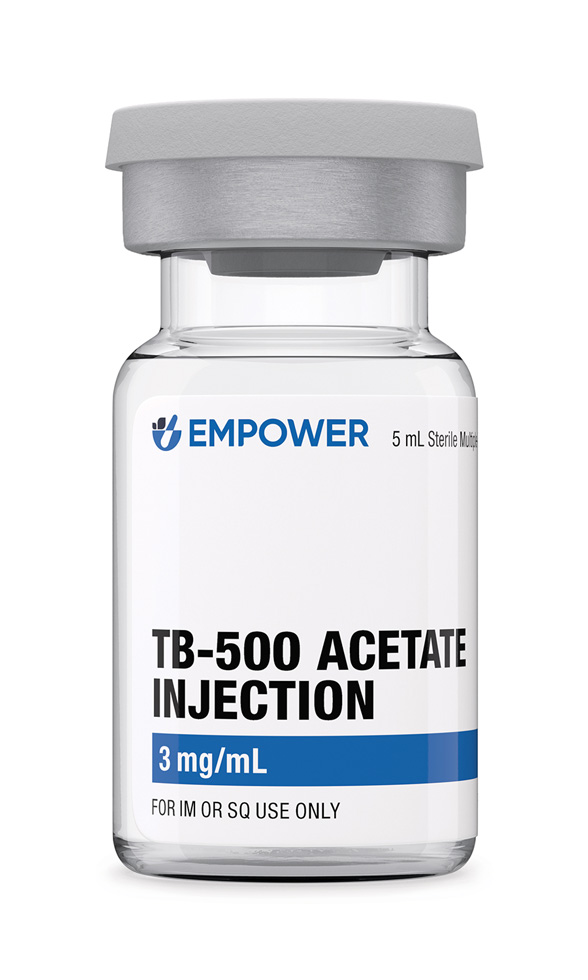 TB-500 Acetate Injection
 GHK-Cu Capsule
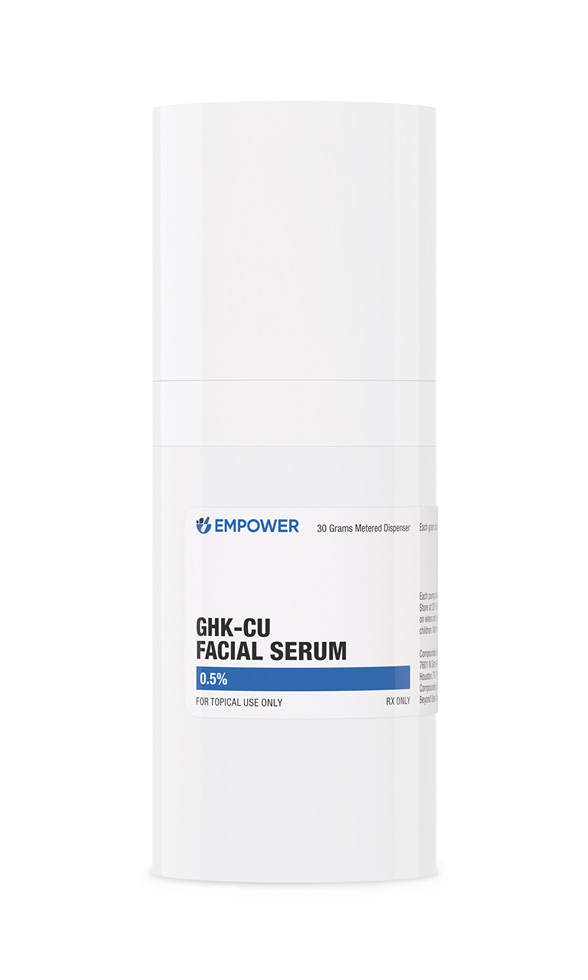 GHK-Cu Facial Serum
 Naltrexone HCl Capsules
 Resveratrol Capsules
503A vs 503B
- 503A pharmacies compound products for specific patients whose prescriptions are sent by their healthcare provider.
- 503B outsourcing facilities compound products on a larger scale (bulk amounts) for healthcare providers to have on hand and administer to patients in their offices.
Frequently asked questions
Our team of experts has the answers you're looking for.
A clinical pharmacist cannot recommend a specific doctor. Because we are licensed in all 50 states*, we can accept prescriptions from many licensed prescribers if the prescription is written within their scope of practice and with a valid patient-practitioner relationship.
*Licensing is subject to change.
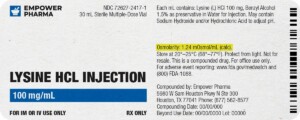
Each injectable IV product will have the osmolarity listed on the label located on the vial.
Given the vastness and uniqueness of individualized compounded formulations, it is impossible to list every potential compound we offer. To inquire if we currently carry or can compound your prescription, please fill out the form located on our Contact page or call us at (877) 562-8577.
We source all our medications and active pharmaceutical ingredients from FDA-registered suppliers and manufacturers.